
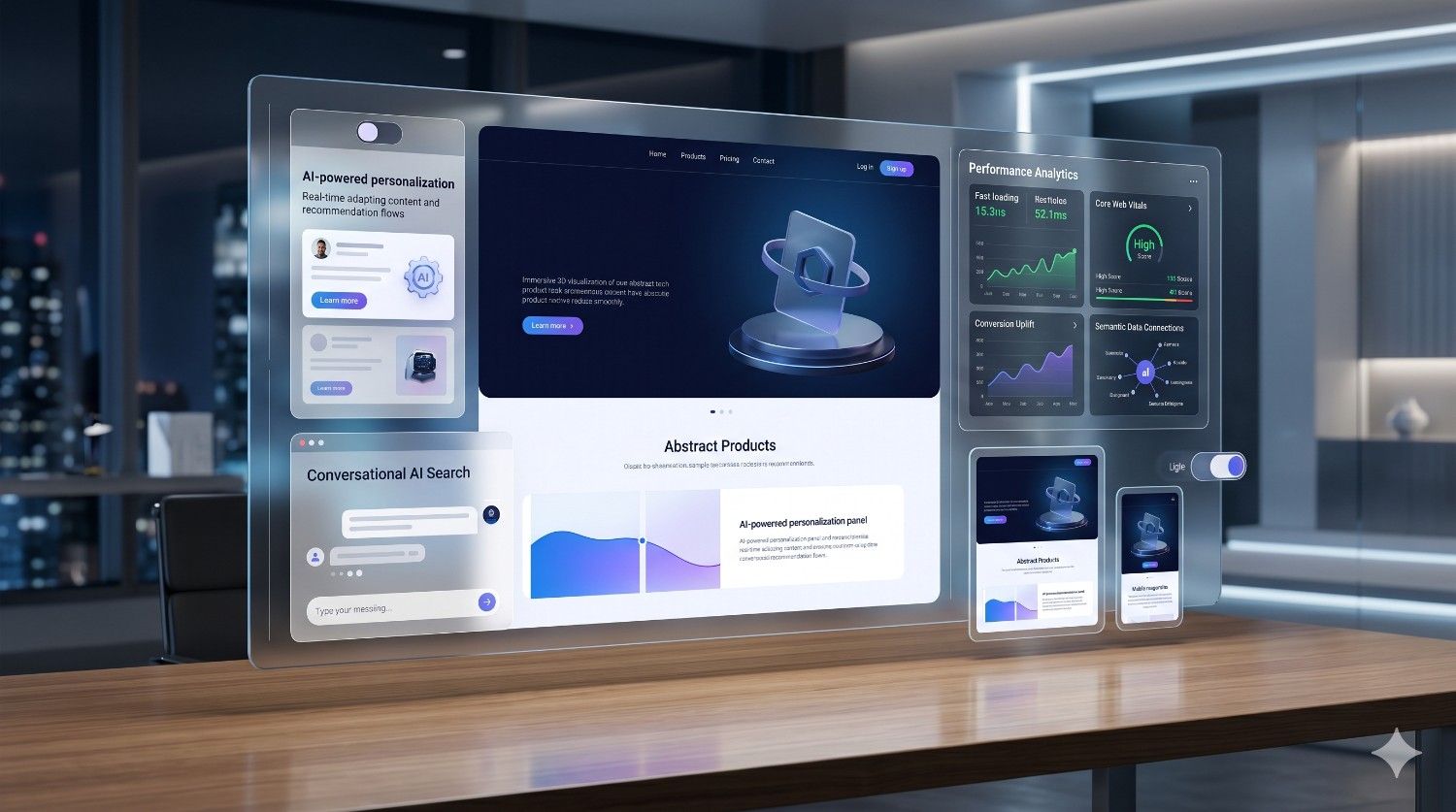
In 2026, corporate website design has moved far beyond basic aesthetics. Today’s digital architecture is strictly driven by performance, deep AI integration, and engineered user experiences that directly impact conversion rates. To maintain digital visibility and revenue, businesses must adapt to these evolving standards.
Here is a streamlined executive summary of the top website design trends shaping the digital landscape in 2026:
- AI-Powered Personalization:
Websites are no longer static. They dynamically adapt layouts, content, and product recommendations in real time based on predictive user behavior and search intent. - Functional Minimalism:
Clutter has been replaced by purposeful design. Clean interfaces now rely on strong visual hierarchies and high-intent elements to eliminate user friction and drive immediate conversions. - Advanced Micro-Interactions:
Subtle loading transitions, hover states, and scroll-based storytelling transform static pages into responsive, highly engaging digital environments. - AI-Optimized Mobile Experiences:
Standard mobile-first design has evolved. Platforms now use AI to adapt content density dynamically and predictively load assets to ensure zero-latency browsing on mobile networks. - Conversational Navigation:
With the dominance of AI assistants, site architectures and FAQs are now specifically optimized for natural language queries and voice-activated search patterns. - Immersive 3D Elements:
Flat imagery is quickly being replaced by interactive 3D product visualizations and immersive brand storytelling, significantly increasing user session duration. - Performance-First Architecture:
Instantaneous loading speeds, lightweight code structures, and flawless Core Web Vitals are now non-negotiable requirements for both search engine rankings and user retention. - Adaptive Themes & Dark Mode:
Offering an eye-friendly dark mode and automatically matching the interface to a user’s operating system preferences is now a baseline expectation for digital accessibility. - AI Search Optimization (AISO):
Traditional SEO has evolved. Content must now feature advanced structured data and semantic relationships designed specifically to be sourced by AI engines like ChatGPT, Gemini, and Perplexity. - Low-Code/No-Code Agility:
These platforms have drastically accelerated development cycles, empowering non-technical teams to execute rapid updates, seamless A/B testing, and cost-efficient scaling.
Final Thoughts
Website design in 2026 is a rigorous science of how a platform performs, adapts, and converts. Businesses that proactively invest in AI personalization, uncompromised performance, and immersive user experiences will secure a dominant competitive edge. Relying on outdated design frameworks actively compromises search visibility, conversion rates, and consumer trust.
Want to build an exceptional, high-performing website that drives real business results? [Contact us now!]