
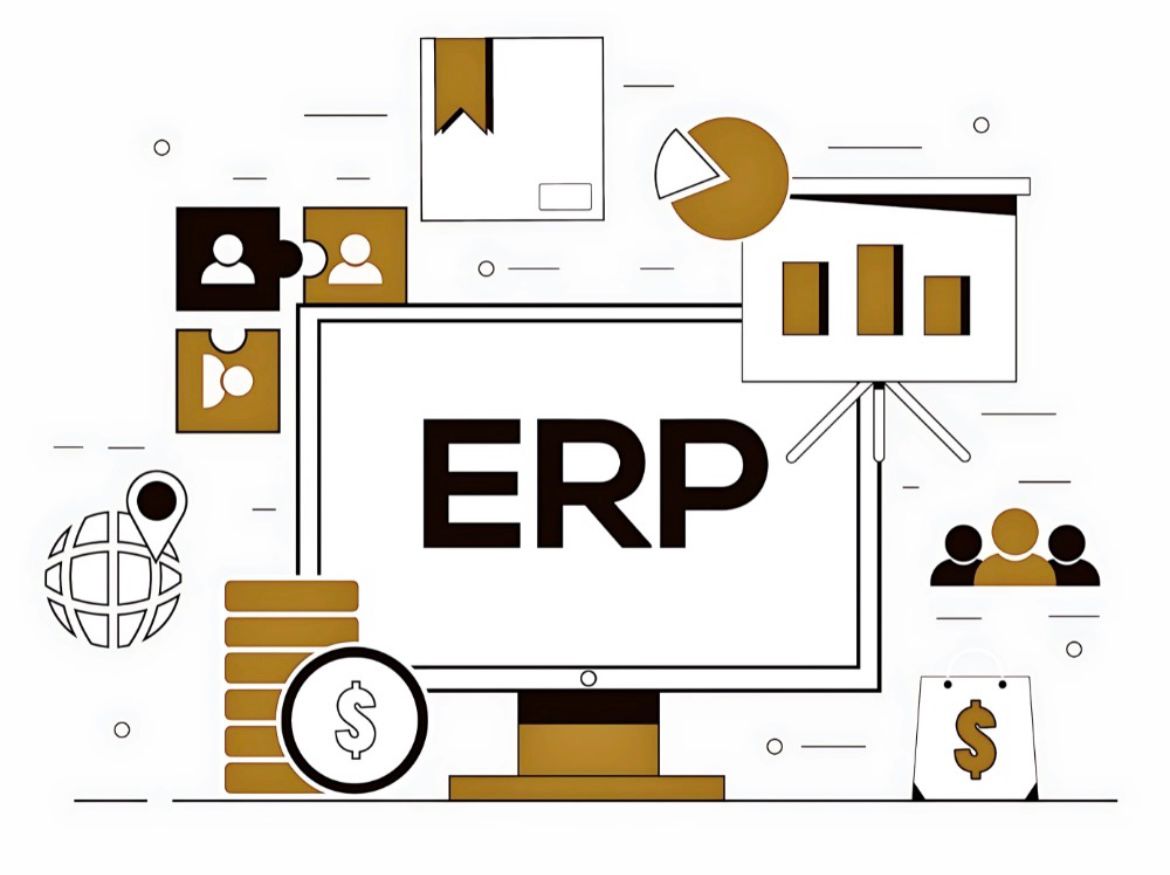
The full meaning of ERP doesn't properly portray its definition. It relates ERP to the processes used to run a business. You can manage these business processes such as planning of resources, Customer Management, Human Resource Management, Financial Management, etc. from a single place. In addition, it provides collaboration between the processes. It empowers small, medium and also large businesses to perform and manage their day-to-day business operations.
____________________________________________________
Importance of Enterprise Resource Planning (ERP) system
Higher productivity
Streamline and automate core business processes so people throughout the organization can do more with fewer resources
Accelerated reporting
Fast-track business and financial reporting and easily share results to act on insights and improve performance in real time.
Lower risk
Maximize business visibility and control, ensure compliance with regulatory requirements, and predict and prevent risk
Improved agility
Identify new opportunities and respond to them through efficient operations and easy access to real-time data.
____________________________________________________
What Are ERP Modules?
ERP modules are simply the business processes of your ERP system. These modules include functionality that primarily serve the back office of the business, including finance and accounting, procurement and certain nonfinancial functions, such as human resources. Some businesses add front-end functionality, such as customer relationship management (CRM) to their ERP systems, enabling them to integrate the enterprise end to end. With a central platform and database across departments, users spend less time compiling data and more time on strategic tasks.
____________________________________________________
Top ERP Modules and What They Do
Most ERP solutions begin with financials and then add extra capabilities, depending on your business priorities, your industry, and changing conditions. Here’s a list of the 10 top ERP modules, how they can help your organization, and why companies decide to use them.
Financial management
The financial management module is the foundation of an ERP system. By tracking accounts payable and accounts receivable, plus helping to manage the general ledger, this module puts your current financial picture and outlook into focus. It also generates and stores balance sheets, payment receipts and commonly supports other financial management functions such as profitability analysis and revenue management, also automates tasks related to billing, vendor payments, expense management, asset management, and joint venture accounting, among other things.
Accounting
The accounting module collects data and drafts reports of accounting operations, receivables, cash flows, payables and handles related transactions, such as expense reporting. It provides your enterprise with the necessary tools to manage financial issues.
Procurement
The purchasing module improves your ability to purchase the products or materials you need to make or sell goods. It automates, tracks, and analyzes quotes while helping to prepare and send purchase orders. Using a list of approved vendors, the module can automate purchases of specific items, which speeds up the process, enforces compliant spending, improves supplier relationships, and ultimately helps increase profitability. More than anything, the right module simplifies procurement end to end streamlining shopping and spend, plus the way you manage direct materials and services purchases. With real-time data used in supplier negotiations and contract awards, it can also identify ways to consolidate your purchasing power so you can secure the lowest cost while reducing supply disruptions.
Customer relationship management (CRM)
CRM module help you manage customers by improving sales and marketing processes, especially those supporting sales leads. These modules store all information on customers and prospects, including every customer interaction and purchase history, and offer segmentation data and targeted cross-sell recommendations. Capabilities to look for in CRM modules include contact management, communication tracking, opportunity or lead tracking, order history, issue ticketing, quote creation, and sales agent productivity. Most importantly, your module must help track customers from the initial marketing stage and through a quote or sales process, culminating in a sale and ongoing customer service.
Manufacturing
With a manufacturing module, it’s easier for your business to plan and manage production runs. That includes making sure your facility has the raw materials on hand to meet demand, can efficiently run a shop floor, and keep costs down—all while ensuring the quality of finished goods. You can also monitor costs and variances by plant, track output against forecasts, and compare supply to predicted demand after calculating the average time it takes to produce an item.
Inventory Management
The inventory management module enables inventory control by tracking item quantities and location down to individual SKUs. This module offers a complete picture of not only current but also incoming inventory, through an integration with the procurement tool. it helps businesses manage inventory costs, making sure they have sufficient stock without tying up too much cash in inventory. The inventory management module can weigh sales trends against available product to helps companies make informed decisions that boost margins and increase inventory turn. It can help prevent stockouts and delays.
Reporting
Basic reporting features provide access to financial data, often in real time, and help a company to prepare financial reports typically for internal use, though some products can produce reports and audit trails needed for regulatory requirements. The reporting features' visibility into ERP financial data helps an organization make data-driven decisions and predictions about its finances. Business intelligence and analytics features give a company a clearer view of its revenue picture. Dashboards can display actual and expected sales, expenses and other financial information.
____________________________________________________
In conclusion, investing in an ERP system is an investment in a company's future. By unifying operations, improving efficiency, and providing valuable insights, ERP systems empower companies to achieve their strategic goals and outpace their competitors. As such, an ERP system is not merely a technological tool, but rather a strategic partner in the journey of growth and development.