
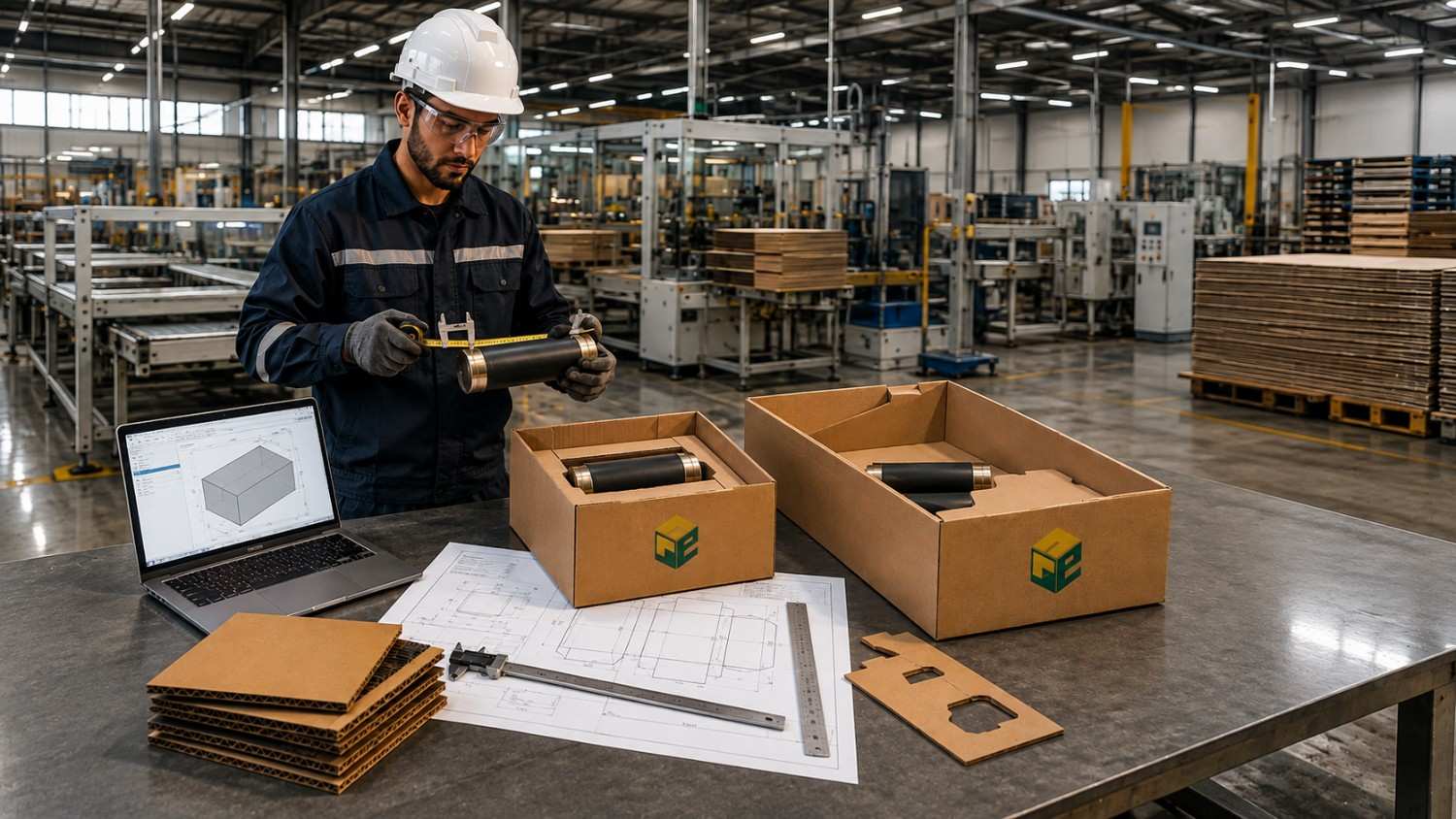
Choosing the right carton box size is about more than just the appearance of the package. It has a direct impact on product protection, manufacturing costs, shipping expenses, and storage efficiency. Many companies focus on product quality but overlook the importance of selecting the correct carton dimensions, which can lead to product damage and unnecessary packaging costs.
In this article, we'll walk you through the key steps to help you determine the ideal carton size before manufacturing.
1. Measure the Product Accurately
The first step is to know the exact dimensions of your product:
- Length
- Width
- Height
It's always best to measure the product after it has been prepared for packaging inside the carton or box, not while it's being used.
2. Determine the Packaging Method
Before deciding on the carton dimensions, ask yourself:
- Will the product be wrapped in plastic?
- Will internal dividers be used?
- Does it require foam or protective materials?
- Will more than one item be packed inside the same carton?
All of these factors affect the final carton size.
3. Allow Enough Protective Space
One common mistake is designing a carton that's exactly the same size as the product. This can make packing difficult and may put pressure on the product.
On the other hand, leaving too much empty space allows the product to move during transportation, increasing the risk of damage.
The goal is to leave just enough room for protective materials without creating unnecessary empty space.
4. Consider the Product Weight
The product's weight doesn't only determine the type of corrugated carton you need—it can also influence the carton dimensions.
Heavy products require packaging that distributes weight evenly so the carton can withstand stacking and transportation without collapsing.
5. Think About Storage and Shipping
If the cartons will be stacked in warehouses, loaded onto pallets, or shipped in containers, it's important to choose dimensions that make the best use of available space.
A well-designed carton improves stacking efficiency, reduces wasted space, and lowers shipping costs.
6. Choose the Right Carton Material
Even if the carton size is perfect, using the wrong material can still result in product damage.
When selecting your carton, consider:
- Number of layers (3-ply, 5-ply, or 7-ply corrugated board)
- Paper type (Testliner, Duplex Board, White Top Liner, or Kraft Paper)
- Carton strength and compression resistance
- Moisture-resistant treated board when required
Choosing the right material is just as important as choosing the right size.
7. Request a Sample Before Production (Especially for First-Time Orders)
Before starting full production, it's always recommended to request a sample carton and test it with your product.
This allows you to verify:
- Easy packing
- Proper product fit inside the carton
- Good stacking performance
- Compatibility with shipping requirements
Making adjustments at this stage can save both time and production costs later.
Conclusion
Choosing the ideal carton box size is an essential part of successful packaging, not just another manufacturing step. When the right dimensions are combined with the correct carton material and packaging method, products are better protected, shipping costs are reduced, and storage becomes more efficient.
If you're looking for custom carton boxes or custom packaging solutions, it's always better to work with an experienced carton manufacturer that can help you select the right dimensions, materials, and specifications for your product—not just manufacture the cartons.